
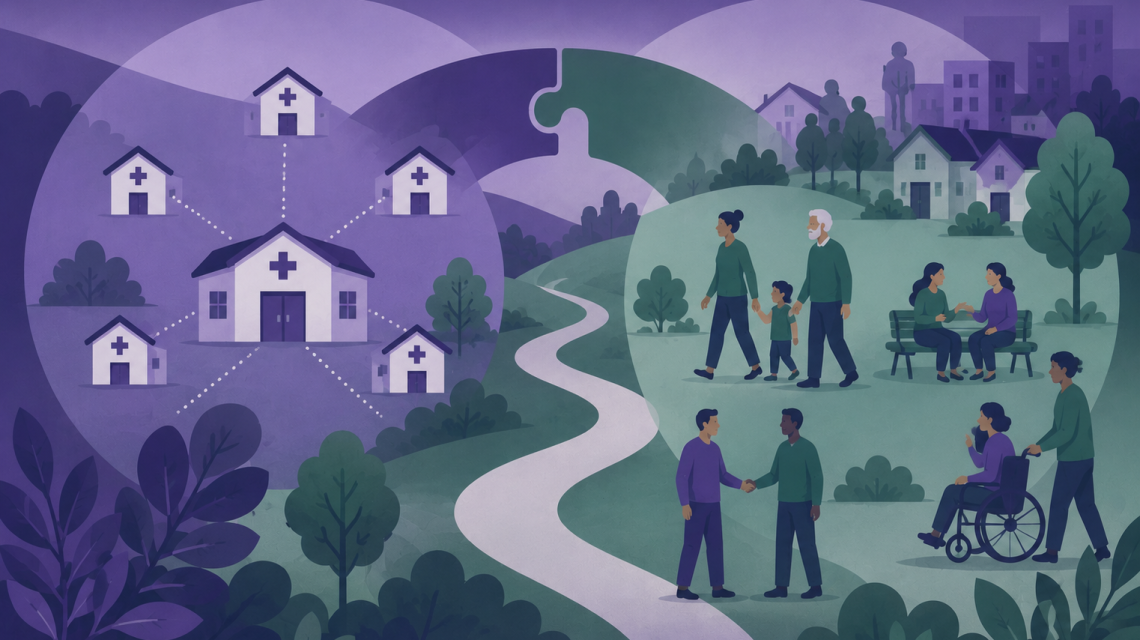
There seems to be universal agreement that the objectives of the NHS 10 year plan under the Hospital to Community banner are correct, (I do have concerns that the metrics used to measure the success of the plans are hospital activity based) however it is helpful that the focus is clear.
It is also important that the responsibility to develop so call Neighbourhood Health rests with the Local Authority Health and Well-Being Boards recognising that the health of individuals is not solely driven by the provision of NHS services.
I also recognise that in order to deliver the Hospital to Community objectives there needs to be effective ‘local’ delivery mechanisms – we have chosen to call these Neighbourhoods and in most areas across the country these neighbourhoods will be coterminous with the existing Primary Care Networks (PCNs), with populations ranging from 30,000 to over 100,000. It maybe unhelpful to highlight that natural communities may not have been the key consideration in the development of many PCN footprints!
There will be examples where these neighbourhoods are perfectly formed – for example where a neighbourhood is based on a town of say 40,000 residents with all the general practices in the neighbourhood providing services for the local residents - however in most areas the neighbourhoods will be an artificial construct made up of a number of different communities which may have little in common and very different needs.
The success of the 10 year plan is to develop services based on the communities that make up neighbourhoods rather than the provision of centralised neighbourhood services.
The work undertaken by local authorities to assess health needs may be the best blueprint to develop services to meet different needs and traditionally the HNA profiles have not been done on what we now call our neighbourhoods. The challenge for our new neighbourhood leadership is to map and understand the different communities within the neighbourhoods.
